a photography project inspired by the childrens classic, The Secret Garden, and the pursuit of the wild, unruly and intriguing places within a city and its suburbs, focusing on Galway in Ireland, and the collecting and mapping of these "other gardens"
Wednesday, 23 May 2012
Sunday, 20 May 2012
Thursday, 17 May 2012
an other garden no.33: martins and their cliff side nests
Stories and Histories
Pictured are a group of Crag Martins. Martins and Swallows are Passerine birds and belong to the Hirundiniae family. Passerine birds or Perching Birds account for over half the bird species in the world and are recognised by their backwards facing toe which allows them to clamp their foot to their perch. Martins and Swallows are usually differentiated by their tail shapes; the Martin species tend to have a square shaped tail and Swallow species a forked tail. The Hirundiniae family is known for its ability to feed while in flight as a result of their slender streamlined body and pointed wings; ideal for gliding. The Crag Martins pictured appear to have built their nest in cavities on the cliff surface which is a site favoured by the species though they also nest in mountainous areas and caves and occasionally buildings. The cliff surface also functions in their hunting as they can pick falling insects disturbed by their flight so close to the rock face. When not catching their prey inflight they will pick them (insects such beetles, ariel spiders and ants) from the water surface or ground.
It is estimated that there are currently up to 1.11 million Crag Martins alive. Because of their sheer numbers and adaptability when it comes to nesting sites and feeding, they are on the "Least Concern" list by the IUCN or International Union for Conservation of Nature.
Saturday, 12 May 2012
Wednesday, 9 May 2012
Sunday, 6 May 2012
Wednesday, 2 May 2012
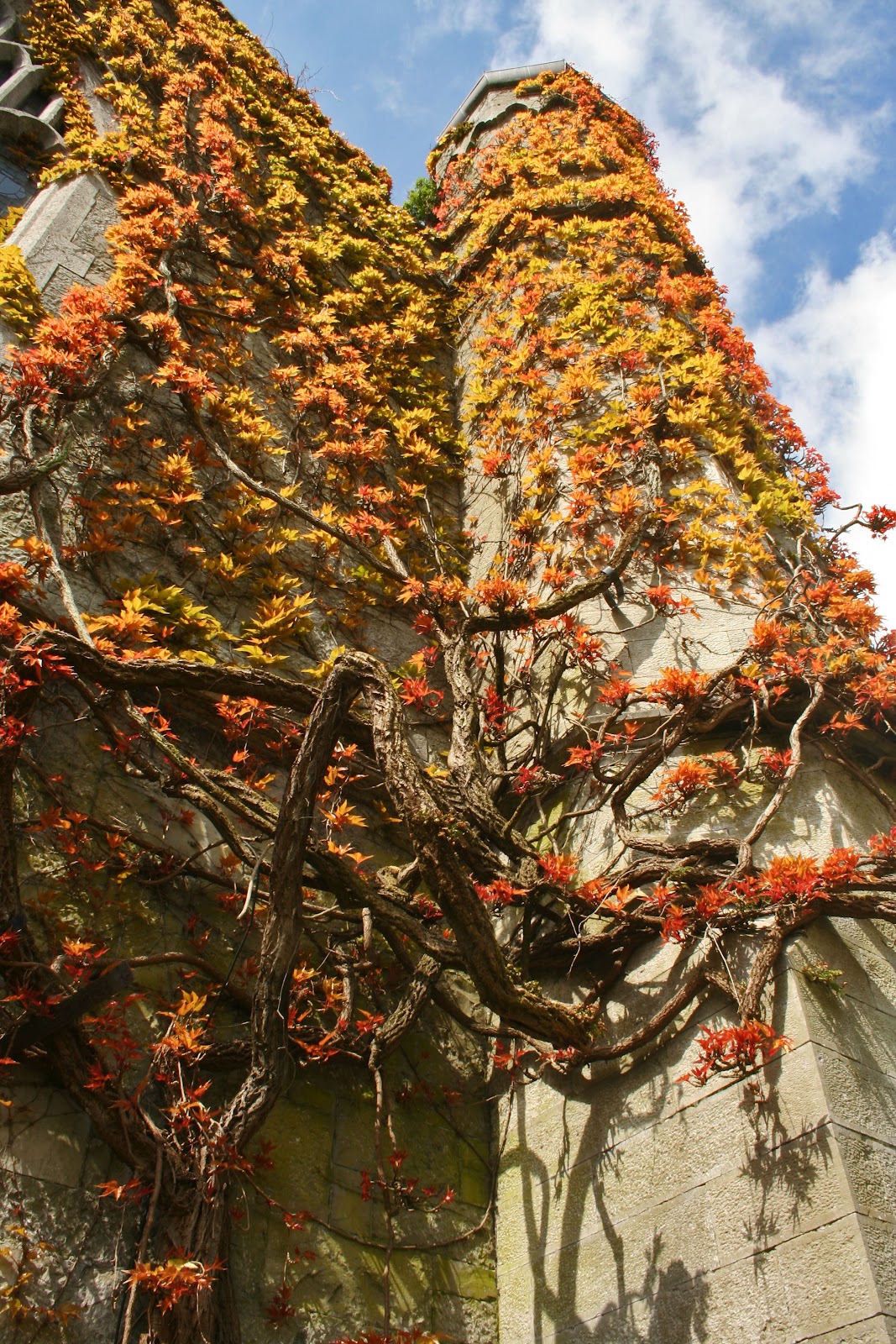
an other garden no.29:climbing plants, the quadrangle, national university of ireland galway
Stories and Histories
The Quadrangle, the
original National University of Ireland Galway building, was built in 1845 alongside universities in Cork and Belfast, all known as The Queen's College and all linked under the umbrella of the Queen's University of Ireland, which received it's charter in 1850. The Quadrangle was built from local limestone in a
Tudor Gothic architectural style and modelled on the Christ Church building in the University of Oxford. The University opened its doors in 1849 to 63 male
students (it was at this time still illegal for women to enter third
level education). In many senses its creation was a positive addition to the city but as it came at the tail end of the Great Famine, when starvation was still endemic, such expenditure on third level education was hard to justify. The secular status of the university caused much discomfort within the Catholic hierarchy particularly as majority of the students would be Catholic.
Interestingly the Tudor style is associated in part with the growing unpopularity of the church in England at the time, as this period saw the time and expense and architectural detail that was previously put exclusively into ecclesiastical building, be placed now elsewhere often taking the form of ornate detail on windows, doorways and chimneys in domestic dwellings.
Subscribe to:
Posts (Atom)